Today, travel experiences are marked by long lines at airports and trying to remember if you removed all the liquids in your bag over three ounces. At the same time, you have to take off your shoes and belt and remove change and metal from your pockets — all before the travelers behind you grumble and glare because you’re holding up the line. It makes you yearn for the days when traveling was something different entirely. Your suitcase wasn’t filled with wrinkle-free dresses and tennis shoes, but your finest wardrobe and jewels that you wore, back when people “dressed” for dinner aboard elegant dining cars during a multi-day sojourn aboard a train. Back then, train travel wasn’t necessarily about your final destination, it was about the people, sites, socializing and scenery along the way.
On April 9, 1851, Hispano farmers established San Luis, Colorado, and today, at 164 years old, it is the state’s oldest continuously occupied town. Located in south central Colorado near the New Mexico border, the San Luis Valley has been home to several different groups, one of the many reasons it holds historic significance for Colorado and the nation. The town was established by Hispano farmers, but the area was originally inhabited by prehistoric cultures dating back thousands of years.
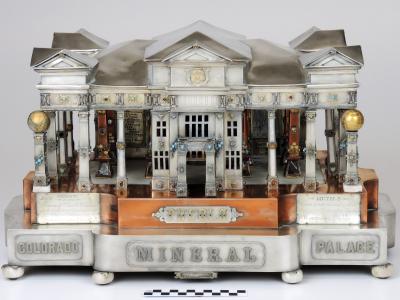
In May 1893, the World’s Columbian Exposition in Chicago opened to the public. The exposition was held to celebrate the 400th anniversary of Christopher Columbus’s arrival in the New World in 1492. One of the objects on view—the Colorado Mineral Palace model—is currently on exhibit at the History Colorado Center.
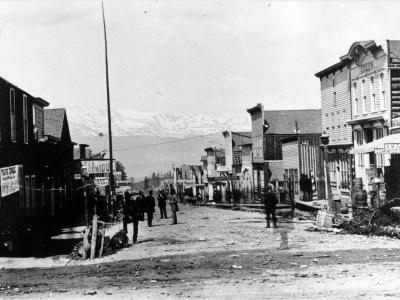
Growing up in Denver, I knew Leadville as a destination for our family to take out-of-town relatives who came to visit Colorado. I still have fond memories of eating ice cream cones on summer days while walking with my cousin through the streets of the Old West. The rocky mountains of Colorado instilled a deep sense of wildness, strength and independence in my 12-year-old mind in the early 1970s. My cousin Mark, from Illinois, was exactly the same age as me, and if I’d looked him in the eye while we ate our ice cream in the middle of Leadville, I’d have considered us equal in every way. How little did I know how hard-fought my attitude came from a history of so many women before me. And in the West were a number of women whose stories tell us the truth about privilege, hardship and endurance.
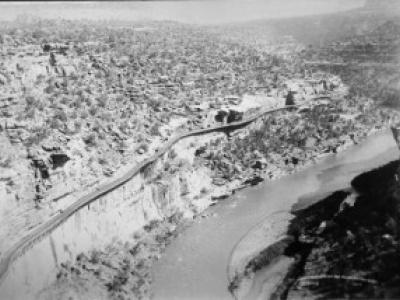
In Montrose County, Colorado, an incredible feat of mining engineering clings to sheer canyon walls above the Dolores and San Miguel rivers. Built in the 1880s, the Hanging Flume carried the water used to extract the fine gold from placer deposits. The flume has captivated historians and tourists alike, but no one has been able to determine exactly how it was built in just a few years in such a remote and inhospitable location.
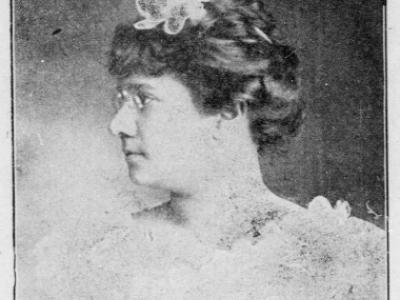
In honor of Women’s History Month, we’re highlighting Emma Azalia Smith Hackley, a former resident of Denver and co-editor of the newspaper the Statesman. The Statesman, which later became The Denver Star, will be the first of 18 titles History Colorado is digitizing to add to the Library of Congress Chronicling America database. If you’d like to learn more about History Colorado’s participation in the National Digital Newspaper Program, please follow this link.
“Sugar bowls, catsup bottles, vinegar cruets, mustard pots, pork and beans, odds and ends of uneaten pie, went flying through the air at Escher’s State street restaurant night before last, while the after-midnight diners ducked their heads under the tables to escape the cyclone of dishes and food.
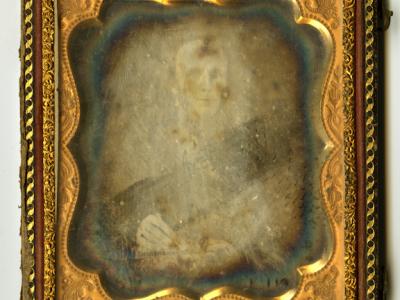
Did you know that October is American Archives Month? To celebrate, we’ll be sharing some behind-the-scenes stories from our Photograph Collection and highlighting some of the work we do to preserve, organize, describe and provide access to the images in our collection. This summer our staff, interns and volunteers have been been digitizing, researching and cataloging our Early Photography collection: 600 daguerreotypes, ambrotypes and tintypes.
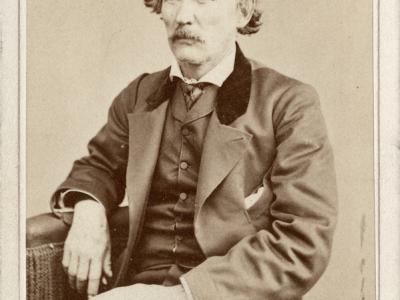
The processing of the Aultman Studio Collection at History Colorado is still underway! However, I had to pause this week, as I had a bit of a mystery on my hands. It all started with an Aultman Studio portrait that depicts a steely-eyed man wearing an embroidered buckskin coat. According to the Aultman Studio Register, this formidable looking man is none other than Christopher “Kit” Carson II, son of the famous frontiersman Kit Carson.