Today, travel experiences are marked by long lines at airports and trying to remember if you removed all the liquids in your bag over three ounces. At the same time, you have to take off your shoes and belt and remove change and metal from your pockets — all before the travelers behind you grumble and glare because you’re holding up the line. It makes you yearn for the days when traveling was something different entirely. Your suitcase wasn’t filled with wrinkle-free dresses and tennis shoes, but your finest wardrobe and jewels that you wore, back when people “dressed” for dinner aboard elegant dining cars during a multi-day sojourn aboard a train. Back then, train travel wasn’t necessarily about your final destination, it was about the people, sites, socializing and scenery along the way.
The Photography Department of History Colorado is pleased to announce that it has been awarded a 2015 National Historical Publications & Records Commission (NHPRC) Access to Historical Records grant, in support of its Colorado 20th-Century Photography Collections Project. Thanks to NHPRC’s generous funding, Photography Department staff will begin a two-year project in August 2015 to make four of History Colorado’s most significant collections of twentieth-century photography available to the public.
Today the mountains of Colorado are continuously flooded with people flocking to enjoy the bountiful trails. But imagine what it was like for the mountaineers at the turn of the century. Bulky wool clothing, heavy equipment and blisters all were part of the journey. These mountaineers were true adventurers who created what became the Colorado Mountain Club (CMC).
As we mentioned in our previous post, this April marks the 103rd anniversary of the establishment of the Colorado Mountain Club! History Colorado holds several collections documenting the CMC’s members and adventures, including the recently processed George Harvey, Jr. photograph albums (Ph.00094) (PDF). These seven albums document the club’s early years, from 1913 to about 1923.
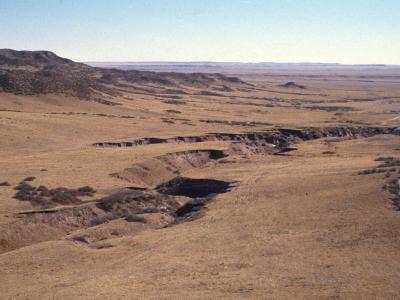
The morning of Sunday, April 14, 1935 started out with sunshine and blue skies, but by the afternoon the temperature had dropped and an ominous black cloud was quickly approaching. This day would become to be known as Black Sunday. While Black Friday sees the mob of thousands of crazed shoppers, Black Sunday saw gale-like winds sweep across seven different states, and creating a widespread blackout from dust, and was one of the biggest storms during the Dust Bowl.
On April 9, 1851, Hispano farmers established San Luis, Colorado, and today, at 164 years old, it is the state’s oldest continuously occupied town. Located in south central Colorado near the New Mexico border, the San Luis Valley has been home to several different groups, one of the many reasons it holds historic significance for Colorado and the nation. The town was established by Hispano farmers, but the area was originally inhabited by prehistoric cultures dating back thousands of years.
The National Park Service National Register of Historic Places program celebrates August as Archaeology month. Given the weather, it’s a great time to get outside and take advantage of the last of summer before school. There are many publicly accessible sites that speak to Colorado’s rich archaeological heritage and all these sites can reveal to us about the past.
Judith Stalnaker grew tired of listening to unsubstantiated rumors that famous, wealthy people used to live in her condo building fifty years ago. So she decided to see if there was any evidence to back up the claims. Come along as this five-part series reveals the exciting, incredible information she found.
Last week we read about George and Ellie Caulkins, Bill Daniels, and even a former Frontier Airlines president, who all spent time at 888 Logan Street, an apartment building in Denver’s Capitol Hill neighborhood that was once said to be, “the most luxurious apartment house ever built in Denver.”
Growing up in Denver, I knew Leadville as a destination for our family to take out-of-town relatives who came to visit Colorado. I still have fond memories of eating ice cream cones on summer days while walking with my cousin through the streets of the Old West. The rocky mountains of Colorado instilled a deep sense of wildness, strength and independence in my 12-year-old mind in the early 1970s. My cousin Mark, from Illinois, was exactly the same age as me, and if I’d looked him in the eye while we ate our ice cream in the middle of Leadville, I’d have considered us equal in every way. How little did I know how hard-fought my attitude came from a history of so many women before me. And in the West were a number of women whose stories tell us the truth about privilege, hardship and endurance.