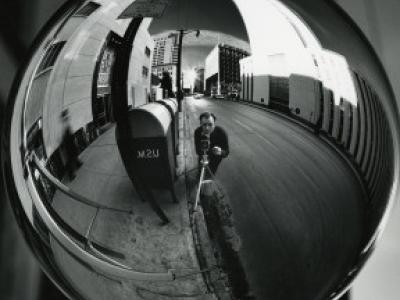
Having officially finished the Winter Prather collection (expect to see a finding aid online soon!), I have time to share one of the more obscure parts of Prather’s biography. First, just to recap: Winter Prather was a prominent commercial and fine art photographer working mostly in the Denver, Colorado and Taos, New Mexico from the 1940’s to the 1970’s. Thanks to the 2015 NHPRC Access to Historical Records grant that History Colorado received last May, I have been able to spend the last two months processing and cataloging Prather’s manuscripts and photographs.
History Colorado is very excited to share “Ute Tribal Paths”, a free online exhibit and digital badge on Ute Indian history, traditions and contemporary lives.
Soon to be on exhibit, this beautiful coffee service set has a unique history—not only because of who owned it, but also who made it. From the estate of Townsend Sherman McAllister, the set was donated to History Colorado in 1970. The donor’s father, Henry McAllister Jr. was raised in Colorado Springs and in 1896 married his college sweetheart Phebe Ketcham of Jericho, Long Island. In 1898, son Townsend Sherman was born in Colorado Springs, followed by Henry III in 1904. In 1906, the family moved to Denver where Henry Jr. established his general law practice. Phebe was active in St. John’s Episcopal Cathedral, as well as in the Colonial Dames and Monday Literary Club. A prominent family in Denver, the McAllisters often entertained in their home at 1880 Gaylord Street. Guests not only enjoyed good food and company, they sat on antique furniture from Phebe’s family who settled Jericho, Long Island, during Colonial times and enjoyed beautiful art.
**Disclaimer: While, of course, the use of the pejorative term “Jap” is no longer tolerated today, writers at the time of World War II used the term liberally. We have left the term intact to preserve the full accuracy of these historical records. Reader discretion is advised.**
There’s often a vast disconnect between those who fight wars and those who remain at home. A manuscript collection recently added to History Colorado’s Archives collection highlights a personal attempt to reconcile this gap. Mr. Ahrend “Ben” H. Turban was born in Denver in 1911 and grew up in various homes for orphans. After attending South High School and the Colorado School of Mines, Ben, as he liked to be called, enlisted in the United States Marine Corps in 1938. He worked as civil engineer and surveyor in major points of military conflict throughout the Pacific, including Guadalcanal, Saipan, and Okinawa.
I have just finished rehousing and processing all of the photographic prints in the David DeHarport Collection! Hold your applause though; I still need to process approximately 2000 color slides, 6200 large format negatives, and 3000 35mm negatives. However, before I begin to wrangle with the organization of the DeHarport negatives, I must consider their long-term preservation.
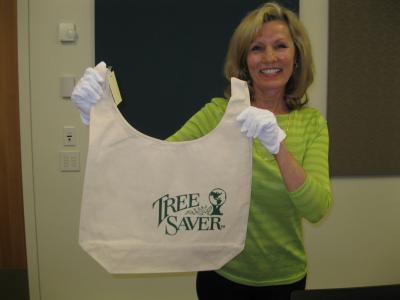
We’re all familiar with the cliché, “It’s in the bag.” We interpret it to mean that something is sure to happen. But a new take on it appears in Your Future is in the Bag, the autobiography of Denver-area entrepreneur Trisha Flueger Hood, who created and operated Tree Saver, Inc.
A couple weeks ago the Pueblo Move Project crew got to talking about our favorite pieces that we’ve found in the last few months since starting the project. There have been some incredible artifacts, including General William Palmer’s roll-top desk, David Moffat’s music box imported from France in 1936 (inside there are a series of bells that are periodically struck with tiny bee-shaped mallets while the music plays—well, presumably anyway), and a teeny-tiny cannon used for Fourth of July salutes from 1861 to 1876.