Most Westerners know about frontiersman William F. Cody—Buffalo Bill—known for his life as a buffalo hunter, Army scout, Pony Express rider, and Wild-West-show creator. His death holds a certain fascination for people, and this year, 2017, is the 100-year anniversary of his death.
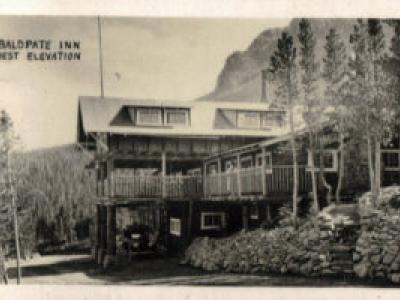
Travel was integral to Estes Park photographer Fred Payne Clatworthy’s life and work. During the early 20th century, transit companies sponsored Clatworthy’s travel to locations near and far. Railroads like the Great Northern and Southern Pacific sent Clatworthy to shoot promotional images in Glacier National Park and the western coast of Mexico in the 1920s, while later in the decade Clatworthy ventured further afield when the Matson Navigation and Union Steamship Companies sent him to Hawaii, New Zealand and Tahiti. Many of these trips yielded his most well-known images: full color autochromes that appeared in National Geographic magazine between 1923 and 1934.
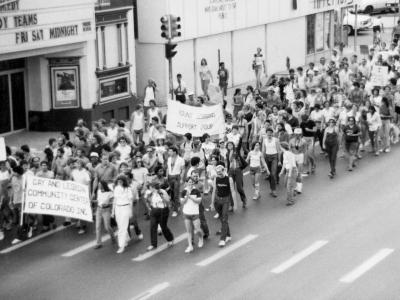
Although no designated landmark pays tribute to Denver’s gay and lesbian history, the annual PrideFest celebration has anchored the community since June 1974. The event’s evolution in Denver reflects social and political changes affecting the gay, lesbian, bisexual, and transgender (GLBT) community through the decades. Not only does PrideFest serve as a time for members and friends of the GLBT community to connect, have fun, demonstrate gay pride, and show support for gay rights; it also commemorates a pivotal moment in gay rights history, the Stonewall Riots.
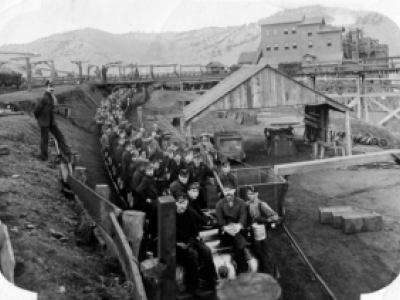
Sitting deep in southern Colorado, the former mining town of Starkville—like so many other mining communities—has seen its share of booms and busts. Although the town is far smaller than it was during its once-lively and industrious mining period, the people of Starkville see their past as something worth preserving. They recently formed a CLG—a Certified Local Government—to help them preserve the town’s remaining historic buildings.
Imagine that your grandfather was a San Francisco ferryboat captain who transported the notorious gangster Al Capone to Alcatraz Island, and that, as a memento of the occasion, he quietly pocketed the key to Capone’s handcuffs. Now imagine that this small key—this tiny piece of history—stayed in your family for a few generations, until one day you got the idea that perhaps it should be rescued from your sock drawer and sent to a museum somewhere. But where should it go? Is there a museum for keys?
What better way to celebrate National Great Outdoors Month than to explore some of Rocky Mountain National Park’s National Register-listed trails? Many of the Park’s buildings, resources, and trails are historic.
Explore the history of Keota and the Pawnee National Grassland on Colorado's northeastern Plains through the Colorado History Museum (formerly History Colorado Center) and the Office of Archaeology & Preservation!
Travel was integral to Estes Park photographer Fred Payne Clatworthy’s life and work. During the early 20th century, transit companies sponsored Clatworthy’s travel to locations near and far. Railroads like the Great Northern and Southern Pacific sent Clatworthy to shoot promotional images in Glacier National Park and the western coast of Mexico in the 1920s, while later in the decade Clatworthy ventured further afield when the Matson Navigation and Union Steamship Companies sent him to Hawaii, New Zealand and Tahiti. Many of these trips yielded his most well-known images: full color autochromes that appeared in National Geographic magazine between 1923 and 1934.
Albert Bierstadt’s magnificent landscapes, Frederic Remington’s exuberant bronzes, the Taos painters’ colorful scenes of the Southwest: you may know some of these legendary artworks, but what are the stories behind them?