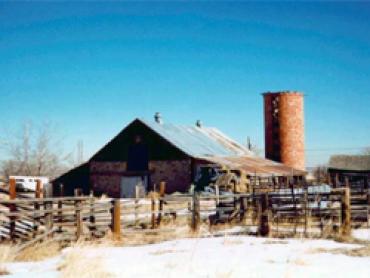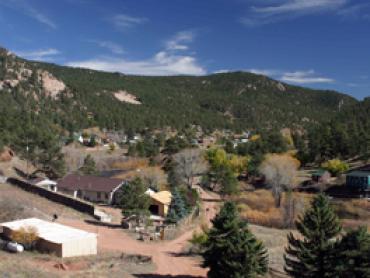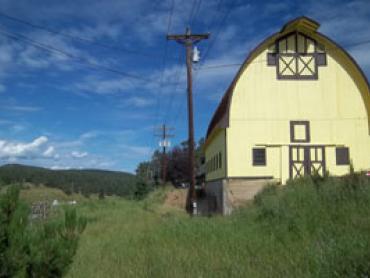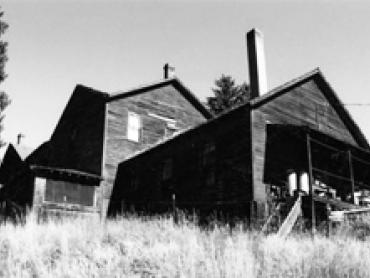
The 48.9 acre property remains as an important rural, historic cultural landscape. Much of the original homestead complex, developed between 1862 and 1910, is intact, and the adjacent fields remain in agricultural production.
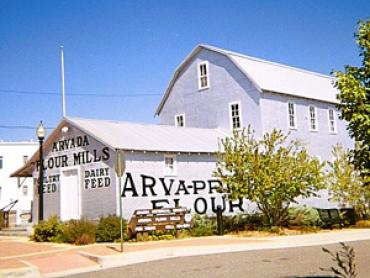
Constructed by Eugene Emory Benjamin, the large wood frame facility is located adjacent the railroad tracks, at the southern end of Arvada’s historic downtown commercial area. The building includes the main 2½-story gambrel roofed mill portion and a one-story dock area.
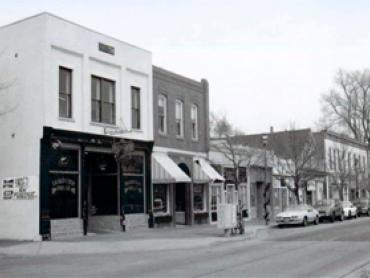
Now a major residential suburb of Denver, Arvada began during the 1870s as a supply center for the local farming community. The district includes a collection of buildings that reflect the evolution and development of a small town commercial area from the late 1800s through the post World War II period.
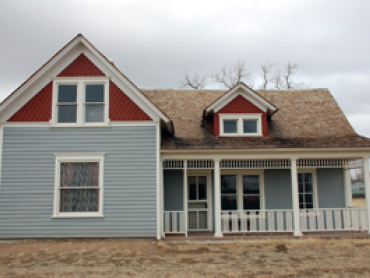
The James H. Baugh House is the earliest extant building from the 1859 settlement period of Jefferson County’s Clear Creek Valley. James H. Baugh was one of the very earliest settlers in the Wheat Ridge area who established a farm in the fertile Clear Creek Valley and helped promote local agricultural commerce.
The district encompasses several communities associated with the development of the Denver, South Park and Pacific Railroad’s route through Platte Canyon during the 1870s to serve the mining areas to the west.
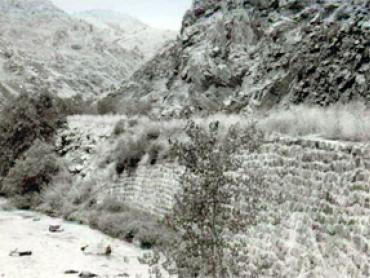
This linear district runs for two miles along Colorado Highway 74 between the towns of Morrison and Idledale. The route is noted for its enclosing granite cliffs and diverse vegetation.
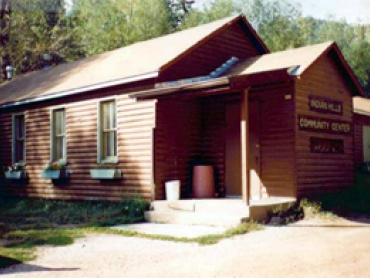
The property is associated with the Indian Hills Improvement Association. Circa 1952, this police, fire, and health protection organization converted and expanded the former 1923, one room wood frame Parmalee School to serve as a combination volunteer firehouse and community meeting hall.
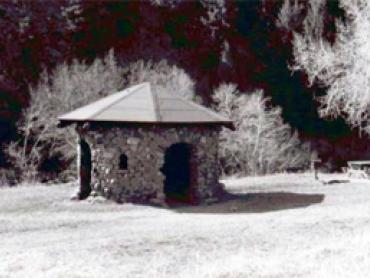
Little Park joined the Denver Mountain Park system in 1917. The unusual eight-sided stone shelter house was designed by Denver architect Jules J.B. Benedict and built by the Civilian Conservation Corps.
The Blue Jay Inn dates from 1880 and originally operated as two separate enterprises, serving local lumbermen. The wood frame buildings were subsequently pushed together, resulting in one large two-story hotel.