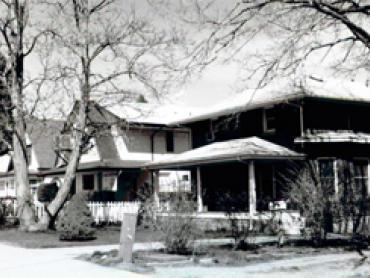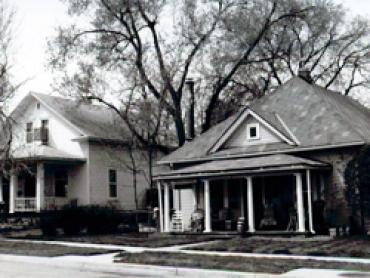
The Stocke Addition was formally platted in 1904, and the Walter subdivision dates from 1920. Development of the neighborhood was aided by its proximity to the interurban electric railway which ran just to the west.
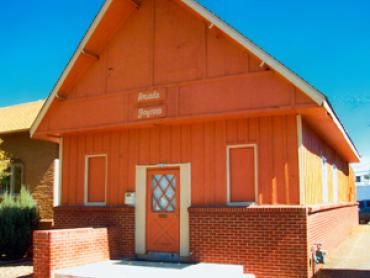
The Seventh Day Adventist Church - Arvada Jaycee Hall is significant for its long association as a civic and social meeting hall. The Seventh Day Adventist Church constructed the building in 1902 as a church and continued using it until 1944 when it sold it to the Arvada Jaycees. Since 1944, the Arvada Jaycees has continued owning and utilizing the building for its meeting hall.
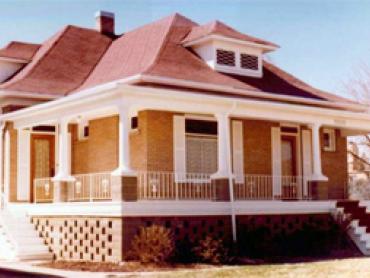
The one-story yellow brick residence has raised basement walls of rock faced concrete block. Notable architectural elements include a bell cast hipped roof, multiple dormers, and a prominent wraparound porch with classical columns.
This residential district, located just west of the Arvada Downtown historic district, is primarily associated with Arvada’s growth after the development of local transportation systems. Its physical layout consists of an evenly distributed grid of lots and tree lined streets.
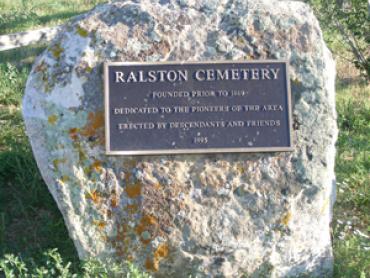
Ralston Cemetery is significant for exploration/settlement and for its potential to yield information important to history and prehistory along with the potential to yield information about rural burial practices as related to social history.
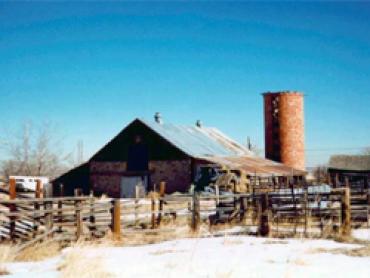
The 48.9 acre property remains as an important rural, historic cultural landscape. Much of the original homestead complex, developed between 1862 and 1910, is intact, and the adjacent fields remain in agricultural production.
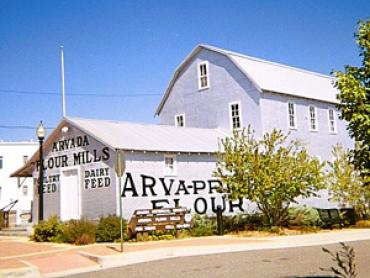
Constructed by Eugene Emory Benjamin, the large wood frame facility is located adjacent the railroad tracks, at the southern end of Arvada’s historic downtown commercial area. The building includes the main 2½-story gambrel roofed mill portion and a one-story dock area.
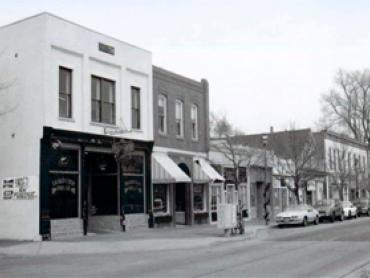
Now a major residential suburb of Denver, Arvada began during the 1870s as a supply center for the local farming community. The district includes a collection of buildings that reflect the evolution and development of a small town commercial area from the late 1800s through the post World War II period.