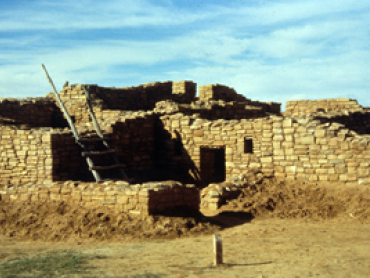
Located within the McElmo River drainage, the site marks the location of a loose cluster of 20 individual habitations or pueblos that were occupied between AD 1000-1250.
The Indian Camp Ranch Archaeological District is significant in the areas of Exploration/Settlement, Agriculture, Economics, Architecture, Religion, Archaeology/Prehistoric, Community Planning and Development, and Politics/Government at the national level.
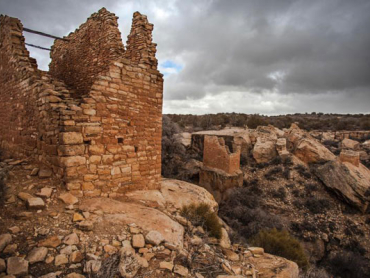
Initiated by the National Park Service, the discontiguous Hovenweep Archaeological District near Cortez was supported across state lines by the Colorado and Utah State Historic Preservation Offices. While Hovenweep National Monument was administratively listed in the National Register in October 1966, no documentation was created.
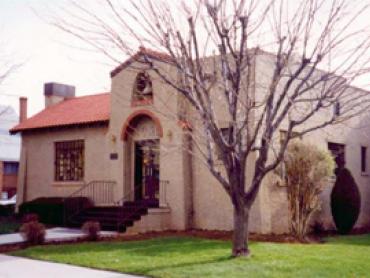
The 1936 building incorporates such Mission style features as a tile roof, stucco finish, an arched entry, and a campanario (vertical wall projection holding a bell). The flat roof sections and vegas are elements seen in the Pueblo Revival style.
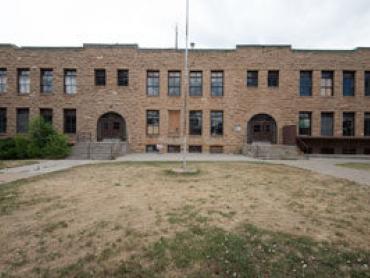
The Cortez High School, also known as the Calkins School, was constructed in three phases (1909, 1924, 1935), reflecting the community’s growing population as well as targeted periods of public investment in education in Montezuma County.
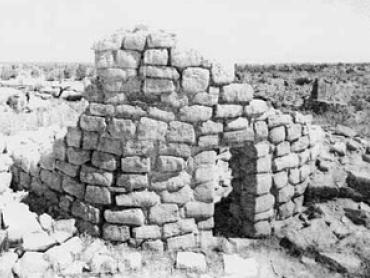
This large settlement, occupied between AD 1140 and AD 1300, possesses the distinctive characteristics of "Hovenweep-type" architecture and construction methods and illustrates the shift of residential settlements to the rim of entrenched canyons.
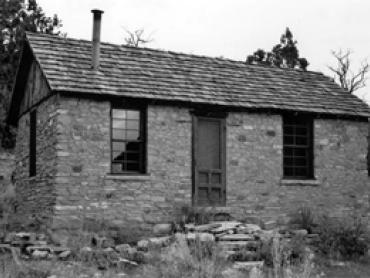
The homestead house, constructed in 1933 by a father and son, illustrates building techniques reflecting the influence and traditions of the Baxstroms’ grandfather, a well-known local mason.
Constructed by the American Bridge Company in 1924, this replacement bridge over the Blue River north of Dillon consists of a rigid-connected, eight-panel steel Parker pony truss with buttresses.
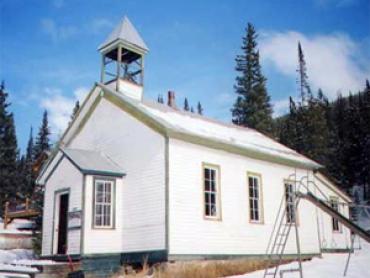
The school building served as the educational center for this high mountain mining community from its construction in 1884 up until school consolidation brought about its closure in 1958. The building embodies the distinctive characteristics of the one-room schoolhouse building type.