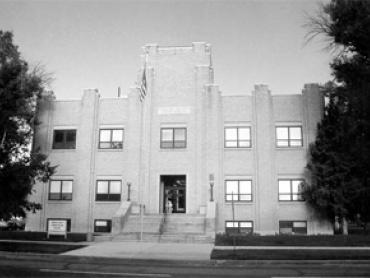
In the midst of the Great Depression, the county commissioners took advantage of a federal construction grant from the Public Works Administration (PWA) to match county funds toward the erection of a new courthouse to replace a 1907 building.
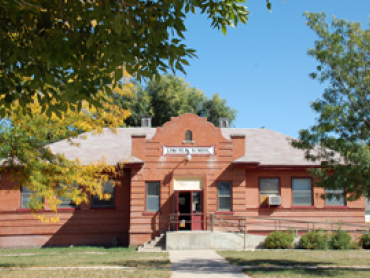
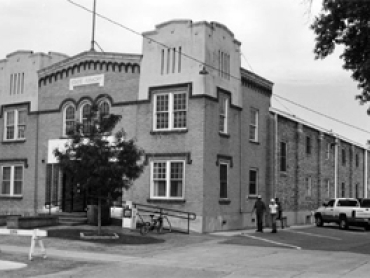
The 1909 Lincoln School is a good local example of the Mission style as adapted to a school. The school’s prominent feature, the curvilinear gable and parapet, is one of the most character defining elements of the style. Other features of the style include a hipped roof and banded rustication on the central bay and lower portion of the building. Additionally, the school is important for its educational development of several generations of Fort Morgan area children.
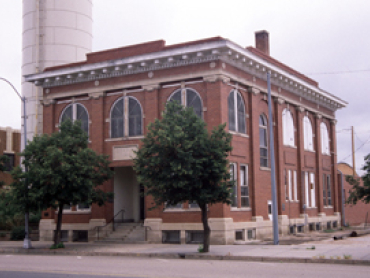
The power plant, a concrete post-and-beam industrial structure clad in red brick, was constructed in 1923 under the supervision of its designer, George Cox, Fort Morgan city superintendent.
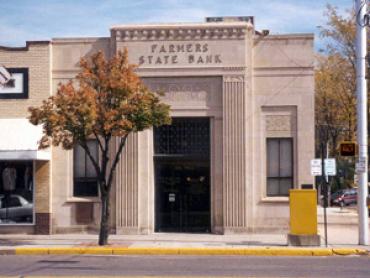
Denver architect Eugene G. Groves designed the Art Deco bank building. Completed in 1930, the one-story building features carved buff colored Indiana limestone.
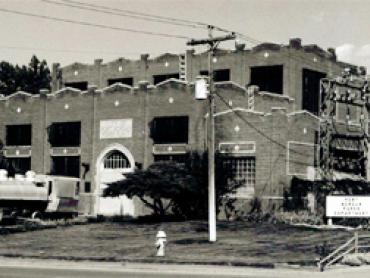
The 1922 State Armory in Fort Morgan is associated with the community’s military and recreational development. The construction of the building represents the initiation and maintenance of a National Guard unit in Fort Morgan. The Armory’s dual purpose of serving as a community center fostered the growth of entertainment and recreational opportunities in the town.
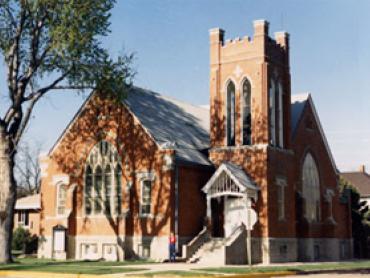
Constructed in 1907, the church is a very good example of the Gothic Revival style. The building epitomizes the primary characteristics of this style as seen in its steeply pitched cross-gabled roof, masonry construction, stepped buttresses, crenellated square tower, pointed arch openings, and windows with label molds and tracery.
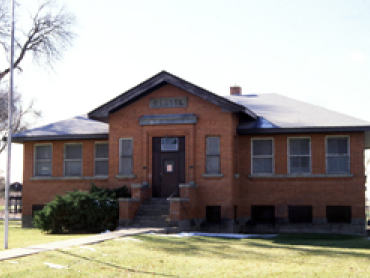
Built in 1911, the school primarily offered classes in grades one through three. It served the needs of immigrant families, first Germans from Russia and then Hispanos, who worked the extensive sugar beet fields around Brush.