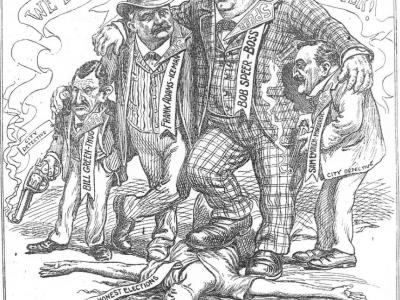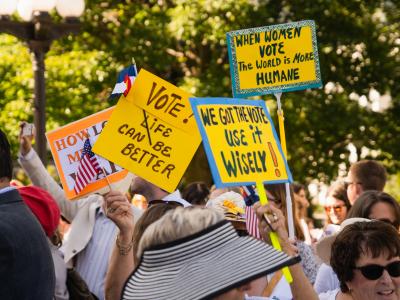
In the fall of 2018, I started working on plans to commemorate the 100th anniversary of the 19th Amendment. As we mark this occasion on August 26, what I thought would feel like an ending to this work feels like just the beginning.
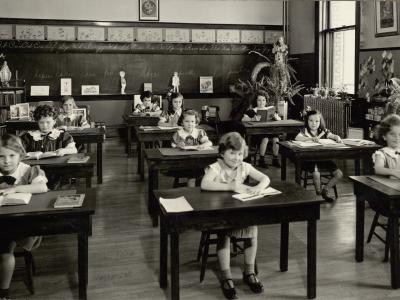
More than a century ago, open-air classrooms had a moment in response to another pandemic. Then it was tuberculosis, another era-defining airborne pathogen that attacked the respiratory system. And the results were encouraging. Could fresh air be part of the solution to school in the time of coronavirus?
The Emerging Historians Award is a program of History Colorado’s State Historian’s Council. Find all three essays and details of the 2020 award round—with a submission deadline of June 1.
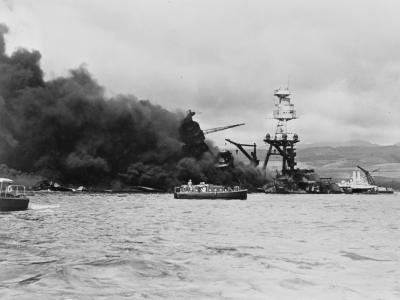
The attack on Pearl Harbor of December 7, 1941, shocked the US into World War II. For the servicemen stationed in Hawaii, it was a Sunday unlike any they’d ever seen. Seventy-six years later it’s difficult for us to really know what it was like to be there, to put ourselves into the shoes of the brave men and women who lived through that day and the resulting war in the Pacific.
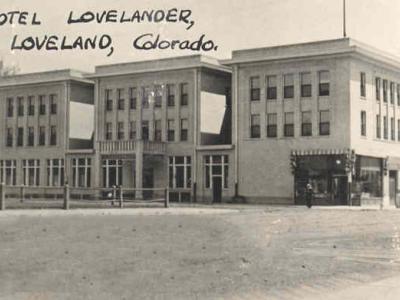
The Loveland Lodge #1051 of the Benevolent and Protective Order of the Elks (the Elks) has been located at the northeast corner of North Railroad Avenue and 4th Street in Loveland since 1927. The lodge has been part of the history of downtown Loveland for so long, many may not know that when the building was first constructed in 1913 it served as a hotel and looked different from how it looks today. When it was the Lovelander Hotel, the west elevation once had a porte cochere, a second light well, and a different fenestration (window arrangement). The south elevation originally had a different type of storefront with awnings.
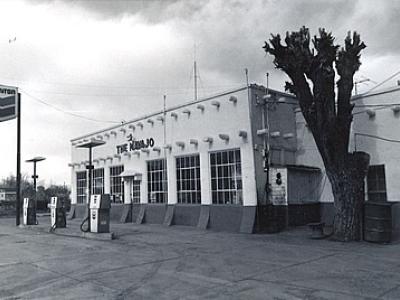
Pueblo Revival, popular between 1905 and 1940, basically imitates the Native American pueblos of the Southwest. The key distinguishing elements are the projecting roof rafters called vigas.
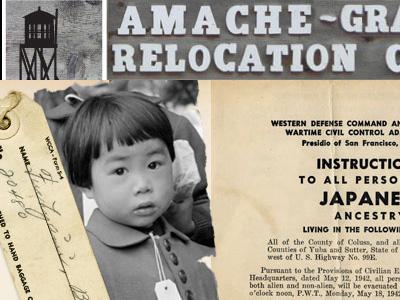
During World War II, 120,000 Japanese and Japanese Americans were forced into internment camps—including one in Colorado called "Amache." Governor Ralph L. Carr took an unpopular stance, inviting Japanese Americans to stay in Colorado after the war and publicly stating his opinion that internment was unconstitutional.
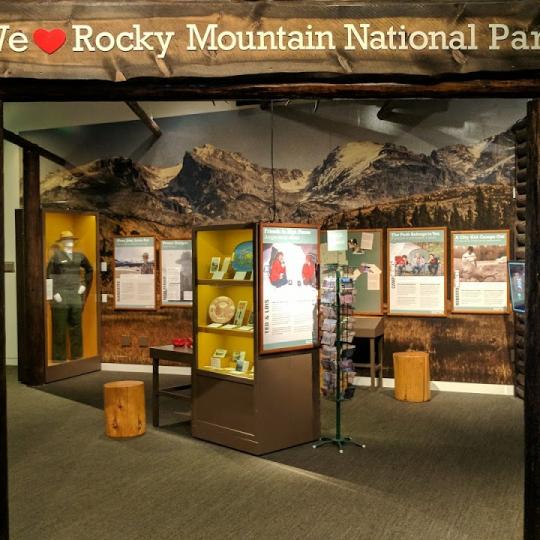
Rocky Mountain National Park turns 100 in 2015. History Colorado is celebrating the people and the places of one of our most cherished spots in the We❤ Rocky Mountain National Park exhibit. The exhibit is part of a year-long, state-wide celebration of Rocky Mountain National Park’s centennial.
The preservation community rightly praises builders, craftspeople, and architects who marshaled capital and creativity to construct the landmarks that define our neighborhoods. Buildings or structures that are associated with significant people and are distinguished by "the work of a master" are often rewarded with eligibility for the National Register of Historic Places. Less often do we cheer the people who didn't build; the stewards who, through accident or intent, fashioned a balance between built and natural beauty.