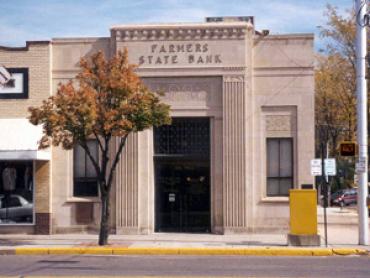
Denver architect Eugene G. Groves designed the Art Deco bank building. Completed in 1930, the one-story building features carved buff colored Indiana limestone.
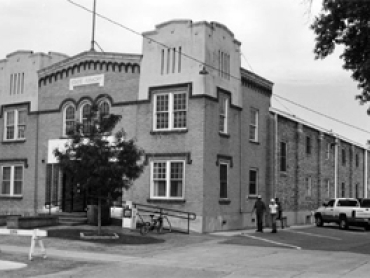
The 1922 State Armory in Fort Morgan is associated with the community’s military and recreational development. The construction of the building represents the initiation and maintenance of a National Guard unit in Fort Morgan. The Armory’s dual purpose of serving as a community center fostered the growth of entertainment and recreational opportunities in the town.
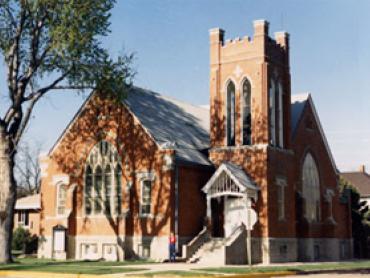
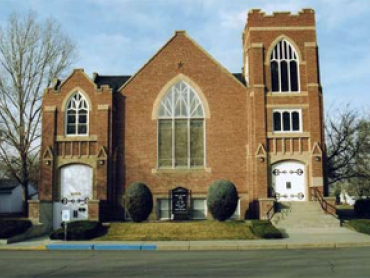
Constructed in 1907, the church is a very good example of the Gothic Revival style. The building epitomizes the primary characteristics of this style as seen in its steeply pitched cross-gabled roof, masonry construction, stepped buttresses, crenellated square tower, pointed arch openings, and windows with label molds and tracery.
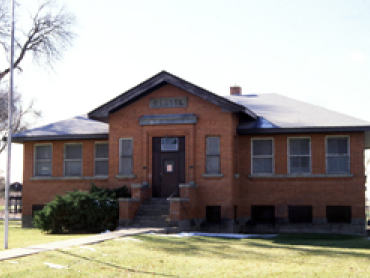
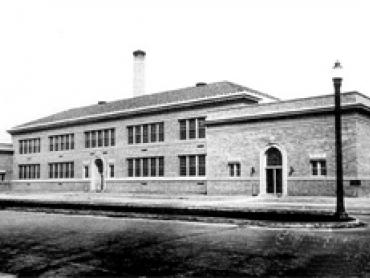
Built in 1911, the school primarily offered classes in grades one through three. It served the needs of immigrant families, first Germans from Russia and then Hispanos, who worked the extensive sugar beet fields around Brush.
The German Evangelical Immanuel Congregational Church is a good example of Late Gothic Revival church architecture. The church possesses the distinctive characteristics of this style, including pointed arch windows, tracery, square tower, and masonry construction.
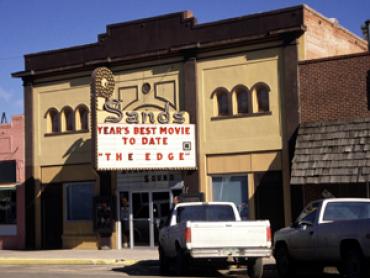
The Emerson Theatre (now the Sands Theatre), with its V-shaped marquee sign, has continuously served as Brush’s primary indoor public entertainment venue for almost nine decades. Started in 1916 by locally prominent citizen Charles W. Emerson, the building housed other small businesses off the lobby that provided food and tobacco for movie-goers.
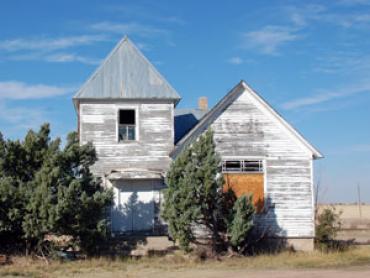
The 1915 Antelope Springs Methodist Episcopal Church is a good example of a Late 19th and Early 20th Century American Movements style building as applied to a rural church on Colorado’s plains.
First established as a resort community, the Denver and Rio Grande Railroad reached the area in 1883 with its narrow gauge tracks and constructed the wood frame depot.
Constructed in 1935, on Colo. Hwy. 149 in the Rio Grande National Forest, it was moved to Mineral County to provide access to the Marshall Park Campground.