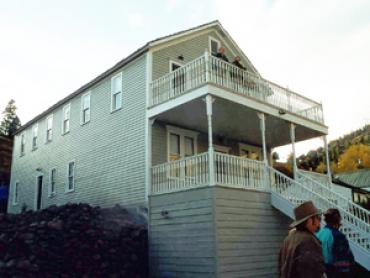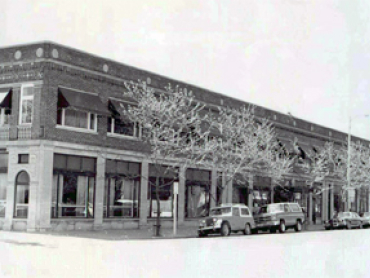
The Rio Grande Hotel was constructed circa 1892 to relieve the extreme housing shortage resulting from the area’s silver mining boom. The hotel was one of only a few wood structures to survive the town’s devastating 1892 fire.
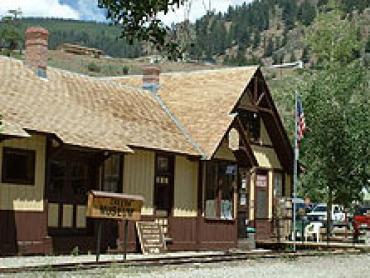
After reaching Creede in 1892, the Denver & Rio Grande Railroad provided the mining district with an outlet for its ore while bringing in the necessities and occasional luxuries of life in a Colorado mining district.
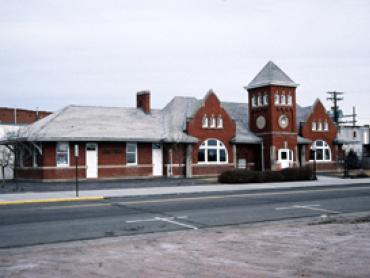
The 1902 building exhibits the Romanesque Revival style resulting in an impressive depot in keeping with the importance of Sterling on the Union Pacific system.
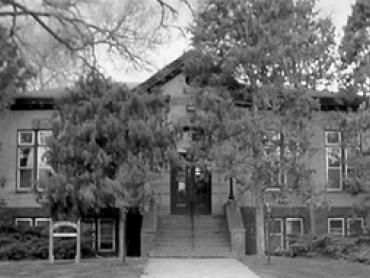
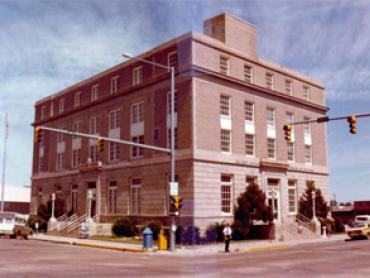
Constructed in 1930, the building is a well-executed example of Neo-Classical design and represents the end of the Beaux-Arts tradition that dominated the first 20 years of the 20th century.
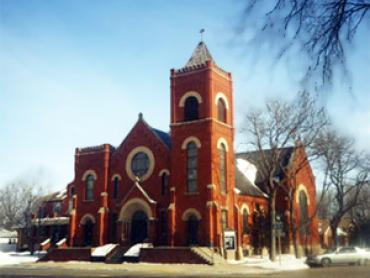
St. Anthony’s Roman Catholic Church, a red brick Romanesque Revival style structure, with a flat-roofed two-story tower on one side of the gabled nave and a three-story tower with pyramidal roof on the other, was begun in 1910 and dedicated in 1911.
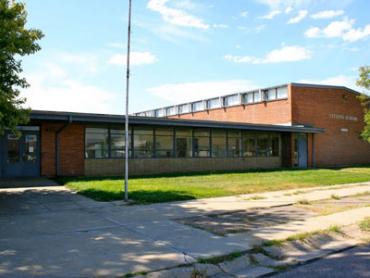
The 1953 Pantall Elementary School was one of four elementary schools that served Sterling, Pantall continuing that role until 2007. Renowned Denver architect Eugene D. Sternberg in partnership with Sterling architect Robert J. Murrin designed the International style school to embrace and convey progress, modernity, safety, and efficiency.
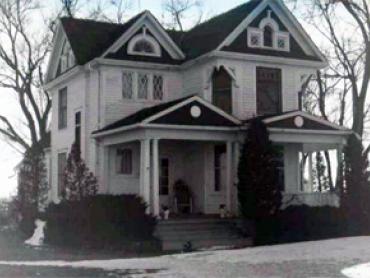
This Queen Anne style residence, with multi-gables, corner cutaways yielding semi-octagonal ended rooms, and Colonial detailing, was constructed on Poplar Street in 1902 by the Hoffman brothers, local carpenters, as their own residence.
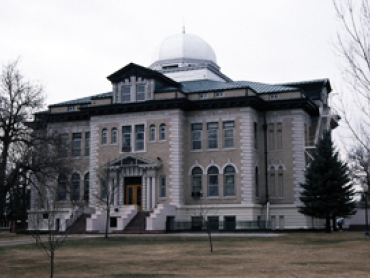
Constructed in 1909, this architecturally significant building includes many classical elements and elaborate ornamentation. The interior is dominated by a central rotunda.