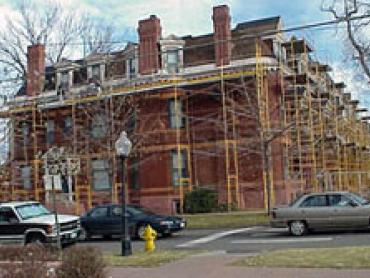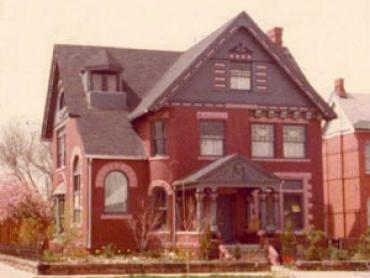
Designed by James Murdoch, The Grafton is a good example of a late Victorian era apartment building, reflecting eclectic architectural detailing. The facade of the 1890 brick building is distinguished by several two-story semicircular bays, with two-tiered porches located between the bays.
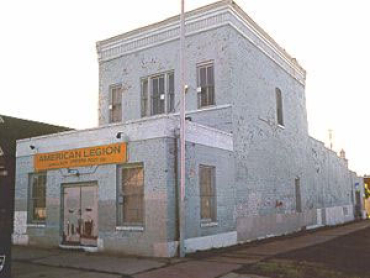
The building represents the efforts of Denver’s Five Points neighborhood to provide recreational activities for black military personnel during World War II.
Although founded in 1858, the City of Denver really began to thrive after 1870 with the arrival of the Denver Pacific Railroad. The population boomed, and many residents converted their original living quarters to commercial uses and moved away from the original town site.
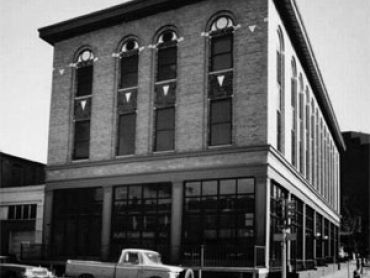
Located on the corner of 18th and Blake streets, the Denver Rock Drill and Machinery Company constructed the circa 1906 three-story brick building. General Electric later used the building as its primary distribution center for electrical supplies. The street level storefronts and the building’s deep cornice are metal.
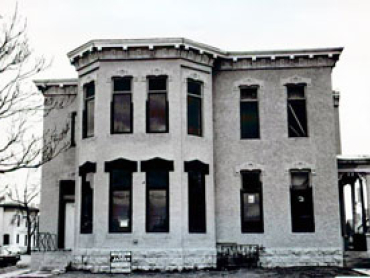
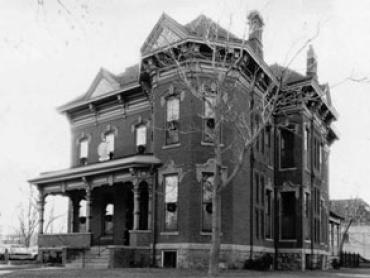
Located within the San Rafael Historic District, the well-preserved 1883 Gebhard Mansion is considered to be one of Denver’s finest residential examples of the Italianate style. The hipped roof of the two-story brick building is accented with several decorative gables and there is a deep bracketed cornice.
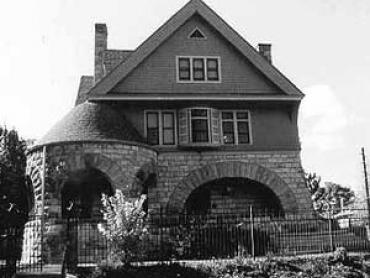
The 1892 dwelling is associated with merchant Russell Gates and his wife, Elinor. Gates established a series of successful mercantile and related businesses in Elbert and El Paso counties.
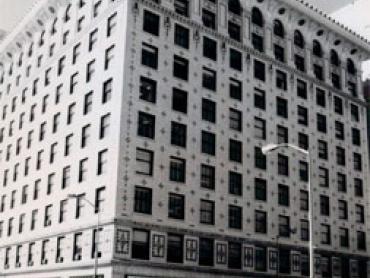
The 1910 ten-story Sullivanesque style building was designed by prominent Denver architect Harry W.J. Edbrooke for the Denver Gas and Electric Company, reportedly as a promotional tool. The somewhat fanciful structure, considered by many to be Denver’s grandest illuminated building, is distinguished by its terra cotta cladding and the 13,000 electric light bulbs that form geometric patterns around and between the primarily double hung windows.
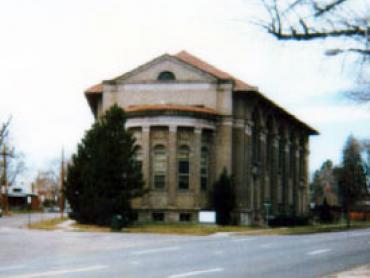
The 1921 Fourth Church of Christ embodies the distinctive characteristics of the Italian Renaissance Revival style as executed by two master Denver architects, Burnham F. Hoyt and Merrill H. Hoyt of the firm Hoyt and Hoyt.
With a portion dating from 1859, Four Mile House is Denver’s earliest surviving structure. The location served as the last stage stop, before entering Denver, on the Wells Fargo Butterfield Stage route between El Paso and Denver.
During a four decade period Ernest Foster managed major mines in Clear Creek, Gilpin, and Summit counties, notably the Snow Drift, Fletcher, Colorado Central, and Saratoga.